


Onychomycosis is a common and difficult-to-treat condition that affects one in four people worldwide.Medically, the term is used to refer to a fungal infection of the nails of the lower limbs - onychomycosis or epidermophytosis.In the latter case, there are foci of infection on the skin.
Big Toe Fungus Causes
Infection occurs through contact with an infected person, their belongings, or in public places.Moist, warm environments in swimming pools, saunas and bathrooms are most conducive to fungal growth.Walking barefoot on the beach can also cause fungal spores to enter the big toenail and foot.
Most commonly, onychomycosis affects the big and little toes of both feet, which can be explained by microtrauma from walking, which opens the door for fungal spores.As a result of contact, infections can occur and the body is sometimes unable to cope with it.
Causes of this disease:
- Decreased immunity due to acute viral illness, HIV, or immunodeficiency.
- Diabetes and psoriasis can destroy the acid response of the skin.The natural barrier that prevents infection from developing disappears.
- Varicose veins and atherosclerosis in the blood vessels of the lower limbs can lead to worsening of blood circulation in the lower limbs.
- Wearing tight shoes can cause wear and calluses.
- Failure to follow personal hygiene rules creates a favorable environment for fungal growth.
- Footwear does not meet hygiene requirements.Feet sweat inside and stay moist for a long time.
- Occupations involving prolonged exposure to moisture or wearing rubber shoes.
- Hyperhidrosis, a condition in which the skin on the feet is constantly moist.
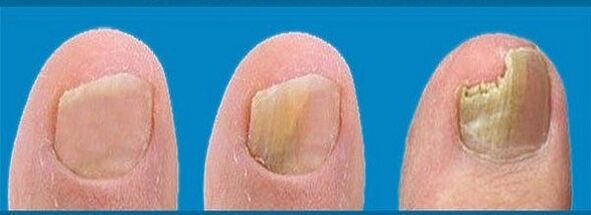
Men aged 35-75 are most susceptible to foot and nail fungus infections.Children under the age of 15 do not actually suffer from athlete's foot.
important.To remove onychomycosis, treatment must be carried out systematically and regularly.Onychomycosis is known to recur frequently.
Symptoms of big toenail fungus
When fungal spores penetrate the skin or under the nails, they begin to actively grow and multiply.Mycelial threads penetrate deep into tissues and feed on human cells.
Characteristic symptoms of the first stage are:
- Red, scaly spots appear on the skin of the legs;
- Tiny white streaks and spots appear on the nail surface;
- The deck was covered in knots and bumps.
Signs of further development of the fungus include:
- Nail color change;
- The deck thickens;
- The skin on the fingers is swollen and itchy.
If left untreated, the nail can collapse or fall off completely.Accompanied by cracking of the skin on the fingers, itching and pain.
Fungus on the thumb cannot be cured with folk remedies alone.Complex treatments are required to destroy the mycelium and prevent recurrence of the disease.

Diagnosis of onychomycosis on big toe
If you notice symptoms of a fungal infection in your big toe nail, you should consult your doctor.Mycologists are responsible for the treatment of epidermophytosis.
Not every clinic has such highly specialized specialists, so most of the time treatments are prescribed by dermatologists.
Doctors perform a visual inspection and take samples of affected tissue to determine the type of parasite.There are several forms of fungus that can affect the nail plates of human fingers:
- Superficial white fungus;
- Normal nutrition;
- Hypertrophy;
- shriveled;
- proximal;
- All of them.
Tissue analysis is necessary to develop the correct treatment approach.An expert will determine the type of infection based on the color, structure, nature of the damage, and the condition of the skin on the foot.He will tell you how and how to treat fungus in your big toe.
How to Treat Onychomycosis
Treatment of epidermophytosis is comprehensive:
- Oral medications;
- external means;
- Traditional medicine methods.
The treating doctor will prescribe oral tablets based on the specific treatment plan.This leads to the accumulation of active substances in human cells and has a harmful effect on the causative agents of disease.
Medications designed to eliminate fungal infections are effective.Some of these have side effects and limitations related to age, pregnancy, breastfeeding, and chronic disease.Therefore, you need to take the medication strictly as prescribed by your doctor.
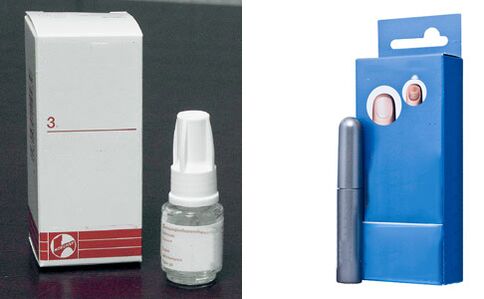
For external treatment, ointments, sprays, varnishes, patches and serums containing substances that inhibit the development of mycelium are used.Apply these products to clean and dry nails from 2 times a week to 2 times a day.It is necessary to follow the instructions and read the contraindications.
In general, folk remedies have no contraindications, but their effectiveness is significantly less than medicines.Their actions are more about symptoms than treating toenail fungus.But they do a great job of cleaning, soothing itching, and disinfecting the affected area.Their action is most effective in the initial stages of the disease.
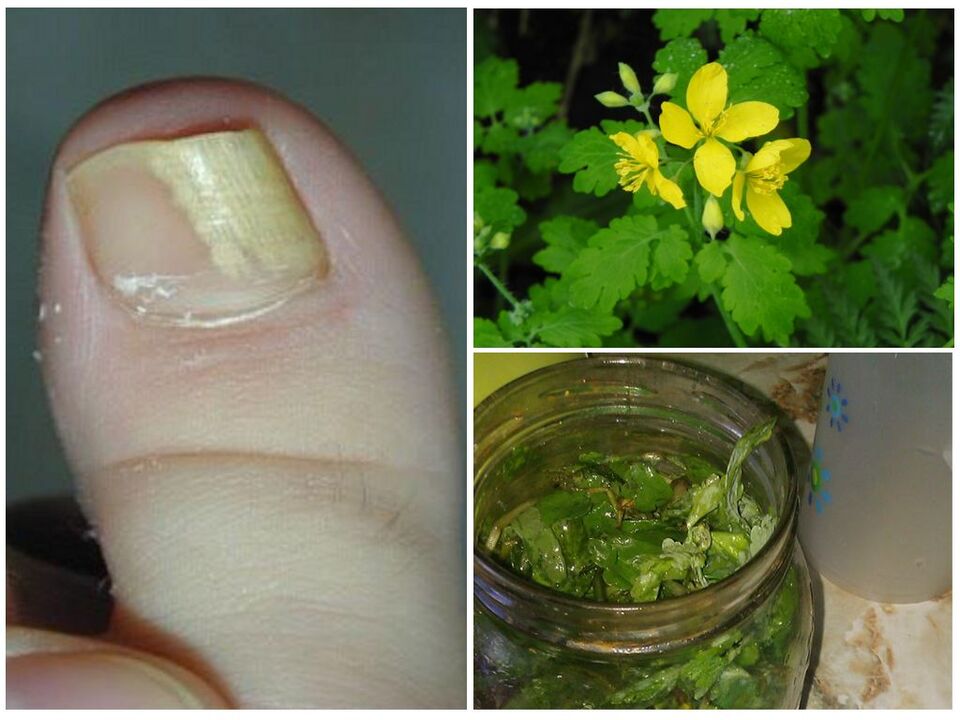
Folk remedies such as bathing with soda, vinegar or sea salt are known.Rub the liniment with iodine and fresh celandine juice.Potato skin masks, lemon dressings, olive oil and garlic porridge can all help relieve itching.
The ultimate treatment for panmycosis of the big toe is removal of the nail plate.The surgery is performed under local anesthesia and the wound is treated with antifungal disinfectant.After a few months, healthy nails will grow back.
In cases of intolerance, drug ineffectiveness and disease progression, new methods of treating fungi using lasers are available.The beam burns the mycelium to a depth of 7 mm.Healthy cells are unaffected, while diseased cells regenerate rapidly.There are contraindications to this method; you should consult your doctor.
Treat onychomycosis with folk remedies
At home, the following methods are widely used to treat deck fungus:
- Vinegar bath or rub.Dissolve table vinegar or apple cider vinegar in warm water at a ratio of 200 ml of 9% acid per 3-4 liters of liquid.The duration of this procedure is 15-20 minutes.Then dry your feet and put on socks.Rub with undiluted vinegar for 15 minutes.
- Soda bath.Three liters of solution should contain 3 tablespoons of baking soda.You can add grated laundry soap.
- Tea tree oil.Add a small amount of essential oil to the bath water.
- iodine.Use in lotion form.Apply to diseased and healthy nail surfaces to prevent mutual infection.
- Celandine, tar and celandine are all excellent antibacterial agents.Lubricate the nail plate and avoid contact with the skin.Use with caution.
- Onion and garlic juices and gruel.Mix with oil or alcohol and apply as a compress or to lubricate nail surfaces.The mixture can cause burns and irritate surrounding tissue, so use with extreme caution.
Folk remedies are useful because of their ease of use and simplicity.But you should not forget to see your doctor.Complex systemic treatment gives the most noticeable results.
What are the consequences of onychomycosis on big toe?
Onychomycosis is not a dangerous disease.You may live with the discomfort and unsightly appearance of your nails for many years.But if immunity declines with age or after illness, the fungus can "bloom."
Fungal spores can infect adjacent nails.It's an extra unpleasant feeling.Progression of the disease leads to complete destruction of the nail plate.Sometimes, a person will be unable to walk due to pain.We must resort to surgery.
important.Untreated onychomycosis can be a source of infection for others.Keratin granules and cells with hyphal spores can cause infection in others.
Prevention of Onychomycosis on Big Toe
Prevention of fungal diseases includes:
- Avoid contact with infected objects;
- Strengthens the immune system to protect against infection.
Personal hygiene must be maintained.Do not use other people's personal belongings or let others use them.Only personal slippers are worn in the swimming pool, bathtub, shower and sauna.Wear disposable socks when trying on shoes.
Wash your feet with soap at least once a day and change your socks every day.Keep shoes dry and ventilated.Special liquids and sprays for disinfecting shoes are sold.
It is necessary to monitor your health, eat right and stick to a sleep schedule.Don't start a chronic illness.Exercise and walking are great for boosting your immune system.
If you have toenail fungus, you need to be diagnosed and treated with medications prescribed by your doctor.Correct use of external means and traditional methods.Treatment time is usually 3-6 months.With regular treatment and prevention of reinfection, it is almost impossible for athlete's foot to return.